Production scheduling
A plan that tells the truth
A schedule is worth as much as its weakest assumption. Torwio calculates setup times from what will actually be left in the machine, and does not pretend an unstaffed workstation will produce anything.
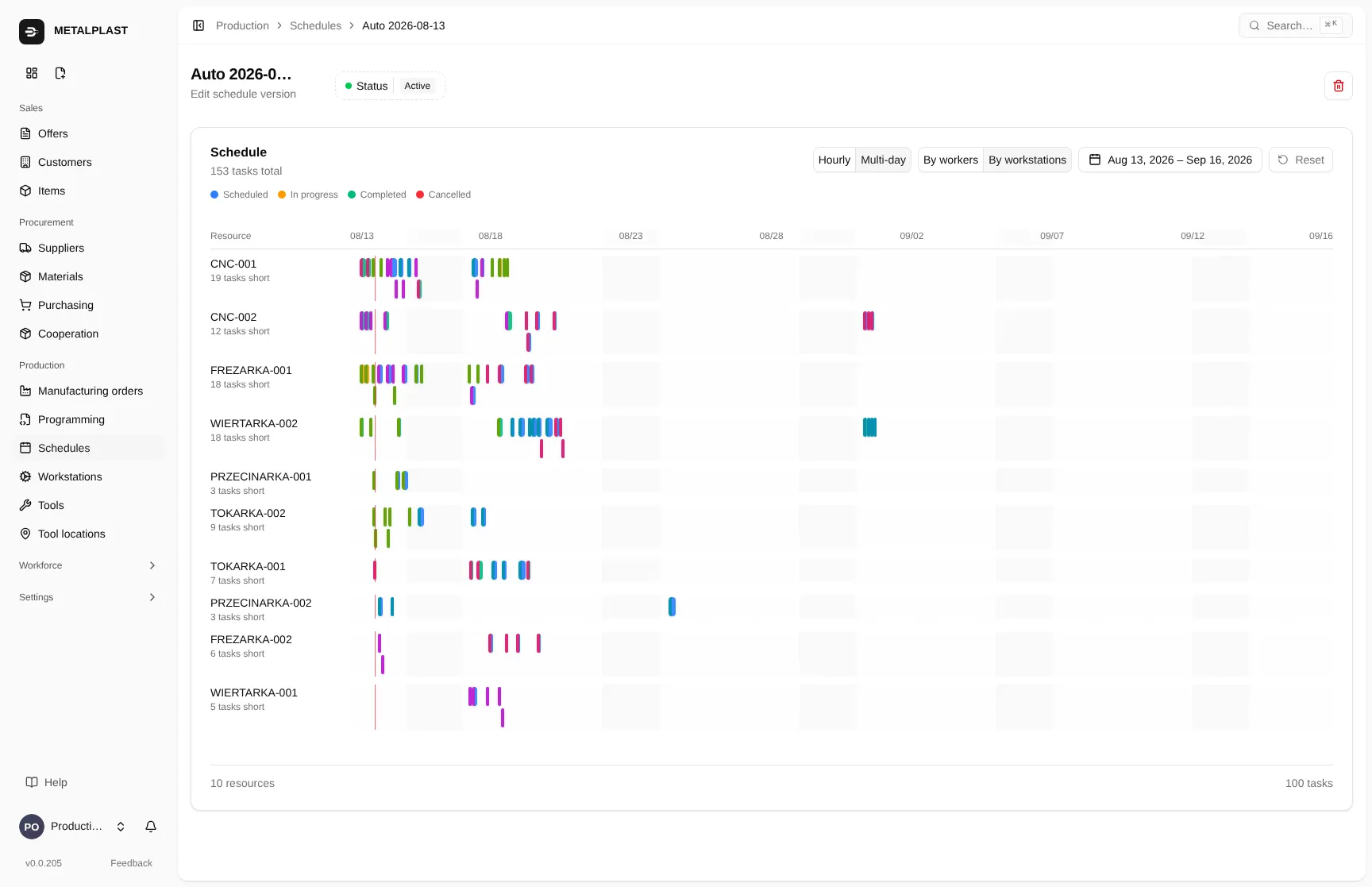
- 01Workstations in rows, time along the horizontal axis.
- 02Colour carries the state: planned, running, completed, cancelled.
- 03The same plan can be read by workstation or by worker.
How the plan is built
Three passes, not one guess
Most schedules fall apart on setup times, because they are estimated up front and nobody revisits them. Torwio revisits them.
01
Operations from the route
The job brings its own process steps: what, on which workstation type, how long, and in what order.
02
Earliest open slot
Each operation gets the first slot where the workstation is free, the material is there, and the previous step will have finished.
03
Setup recalculation
Once placed, the system checks which tools will actually remain in the machines, recalculates setup times, and lays out the plan again — until the numbers stop changing.
Every pass uses the same open-slot rule, so the recalculated plan still satisfies every constraint — it is not a patch applied to a finished chart.
Staffing
A workstation with nobody on it is flagged
A plan that puts work on a machine nobody is standing at looks great and is useless. Torwio shows those workstations outright, so the decision — move people or move the date — is yours and made in time.
Shifts and daily summaries are calculated on plant time, not on universal time. The night shift ends when it actually ends.
Screenshot missing
schedule-staffing.png
Generate it with the tests in the rozdzielacz repo, then run bun run shots:sync.
- 01A workstation with nobody assigned during its planned slot.
Plan versus reality
You see the gap at the step, not in a quarterly report
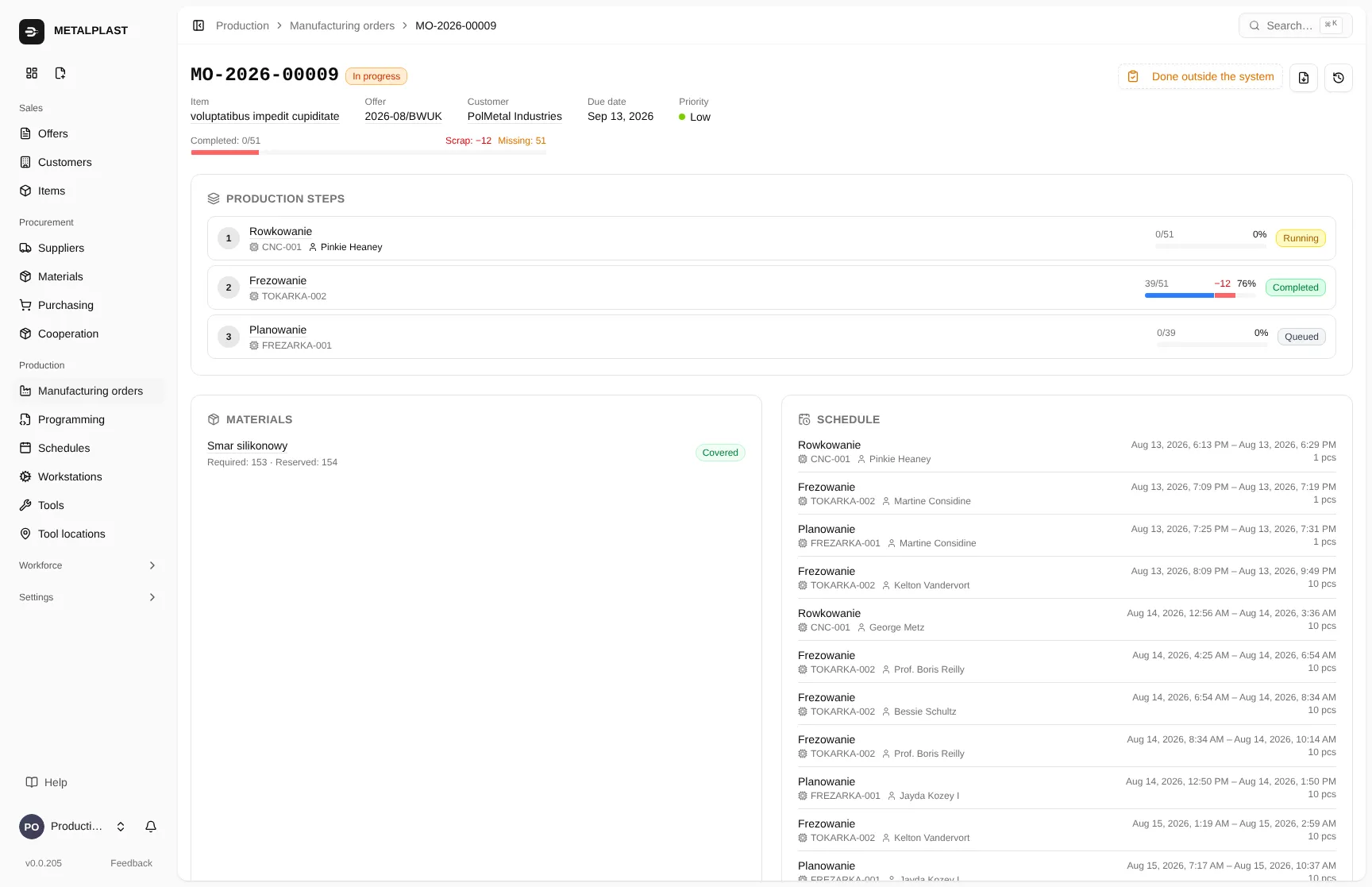
- 01Step completed: 42 of 42 pieces, counted from operator reports.
- 02Every run with its actual time, worker and quantity.
Every process step shows how long it was meant to take and how long it actually took. After a few jobs you know which standards were invented and which hold up.
That is the only road to a schedule anyone will believe: fix the times where they do not match, instead of padding everything.
Material
An operation does not start without material
Reserved against the job
Material is assigned to a specific job, not just sitting “somewhere in stock”. Two jobs cannot reserve the same piece.
Start is blocked
An in-house operation will not start while material coverage is incomplete. Subcontracted operations are exempt.
Live coverage
The job card shows material availability as of now — including a delivery that arrived after the job was issued.
Questions
The questions that come up anyway
01
Does the schedule account for setup time?
Yes. Torwio does not bolt setup on after placing operations — it lays out the plan, checks which tools will remain in each machine after every operation, recalculates the real setup times, and lays the plan out again. It repeats until the calculated times stop changing.
02
What happens when a workstation has no staffing?
The schedule flags that workstation instead of hiding the problem inside the plan. You can see immediately that planned work has nobody to do it.
03
Does the plan enforce material availability?
Yes. An in-house operation will not start until material is reserved in the required quantity. Shortages appear on the job card before they stop the work.
Demo
Try the schedule on your own jobs
Enter a few real parts and see how the plan comes out. If something does not match how your shop works, tell us — that is the point of the 21 days.