Inventory and purchasing
Material assigned to a job, not “somewhere in stock”
The most expensive downtime is a machine standing idle because the bar that was supposed to be there went to another job. Torwio reserves material against specific work and tells you about a shortage before the operator does.
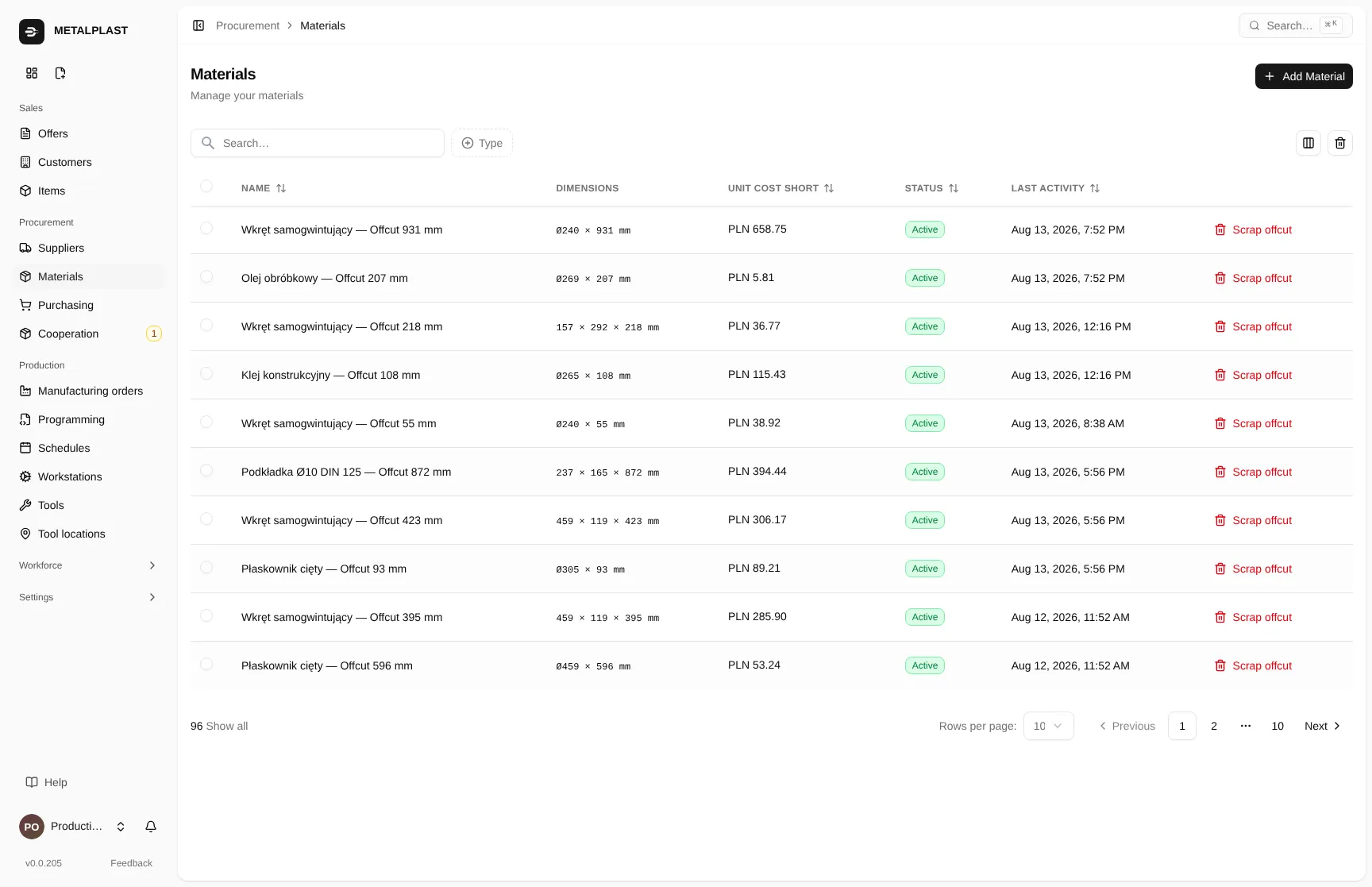
- 01Grade, shape and dimensions — these decide whether the material fits.
- 02Unit cost taken from the supplier’s offer.
- 03Offcuts left after cutting return to stock as their own items.
How coverage is calculated
The material family, not one specific piece
A job’s requirement is compared against live reservations of material with the same grade, shape and dimensions — not against a list drawn up at the moment the job was issued.
01
Requirement
The part’s bill of materials says how much of what is needed for the ordered quantity.
02
Reservations
Material reserved against this job is summed live — including what arrived yesterday.
03
Gate before start
Coverage short — an in-house operation will not start. The operator sees the reason before reaching for the part.
Purchasing
One door for changing stock
Material and tools change state only through a purchase order: placing, receiving, cancelling. There is no side door for someone to “fix” stock by hand on a Friday afternoon.
Receiving records the actual delivery date — useful when you need to reconstruct when a delivery really arrived.
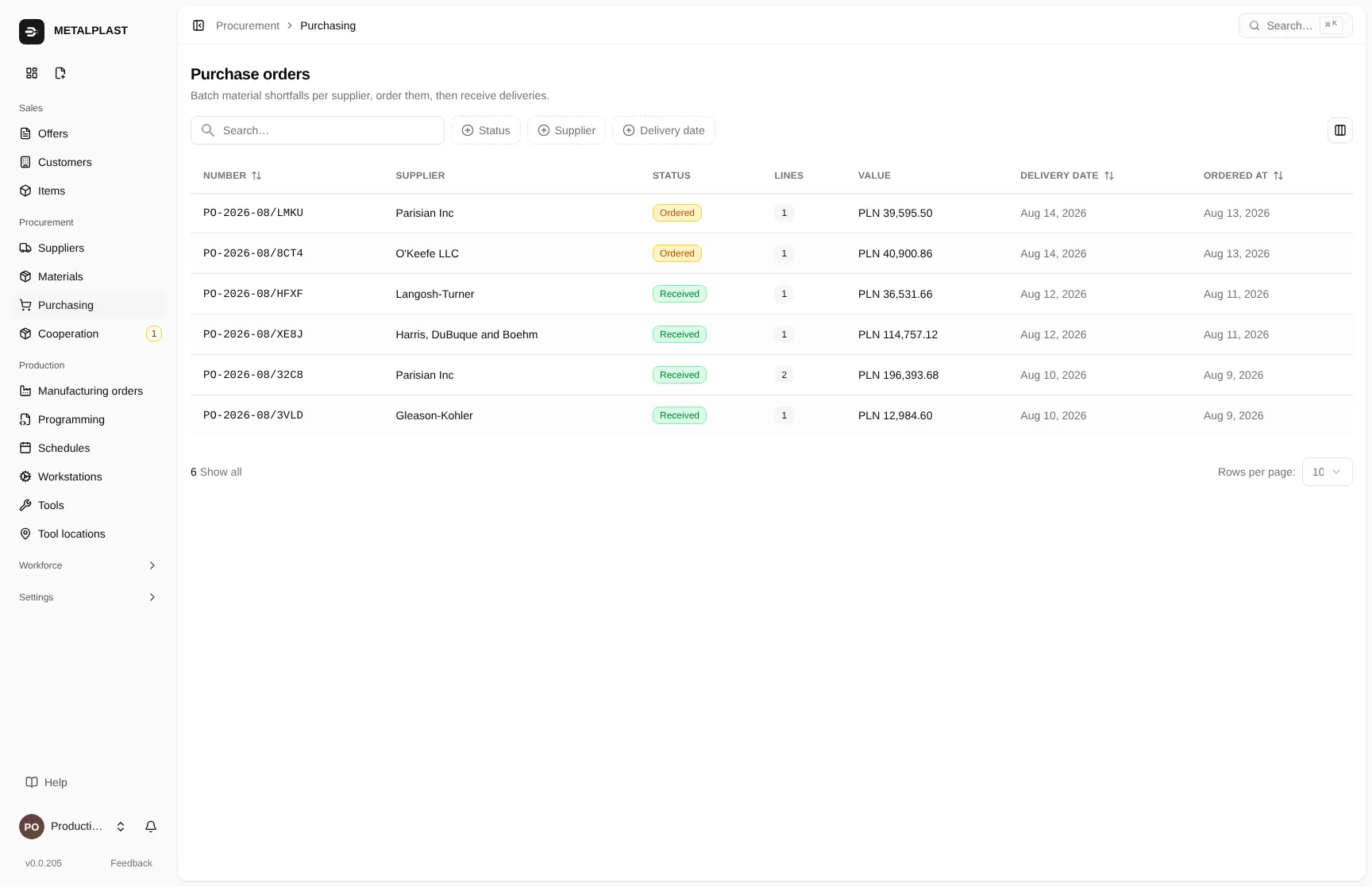
- 01An order always has a supplier — shortages are grouped by it.
- 02Order state: ordered, then received with the delivery date.
Tools
The system remembers what stayed in the machine
A tool does not go back to the cabinet when an operation ends. It stays at the workstation until the next job pushes it out — because that is what actually happens on the floor.
That is how the schedule knows how long a setup will take: it checks what is already in the machine. And when slots run out, the tool released is the one needed furthest ahead in the current plan.
Questions
The questions that come up anyway
01
How does Torwio decide that material fits a job?
Material is identified by grade, shape and dimensions. Coverage is calculated at the material family level, so a bar with the same parameters from a different delivery still covers the job’s requirement.
02
Can material status be changed outside a purchase order?
No, and that is deliberate. All state changes for materials and tools go through purchase orders — placing, receiving or cancelling. No side doors means stock matches what actually arrived.
03
Are tools in the system too?
Yes. Tools have suppliers and prices, are ordered through the same path as material, and the system remembers which ones stayed in the machine after the last operation — that is what setup times in the schedule are calculated from.
Demo
Enter your materials and see the coverage
In the demo you create a few grades, issue a job and check whether the system spots shortages the way you would. If it does not, that is the best moment to tell us.